Vibrio cholerae genomic data
In this section, we will describe:
The Vibrio cholerae reference genome
The Vibrio cholerae genome was first sequenced by Heidelberg et al 2000. They sequenced strain N16961, which belongs to the current pandemic lineage (7PET lineage). They found that the genome is four Megabase and consists of two circular chromosomes, a larger chromosome of about three Megabase and a smaller chromosome of about 1.1 Megabase. Together, these two chromosomes have about 4000 genes, and the GC content of the chromosomes is about 47%.
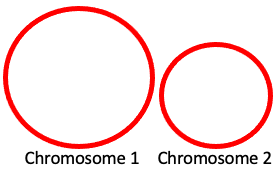
It’s worth bearing in mind that N16961 is the reference strain, but there may be a wide variety of genomic variation in the V. cholerae population worldwide. Some interesting examples have already been reported. Johnson et al 2015 reported a V. cholerae isolate that has the two chromosomes fused into one big chromosome. Okada et al 2015 reported an isolate with a third replicon of nearly one Megabase so that its genome size was five Megabase. As we sequence more and more genomes of V. cholorae isolates, we are likely to see more and more genomic variation.
What genomic data is available for Vibrio cholerae?
Since the year 2000, genome sequencing technologies have greatly improved, and this has meant that many different V. cholerae isolates have had their genomes sequenced. An example of this was a key paper by Chun et al 2009, who sequenced the genomes of 23 diverse V. cholerae isolates that had been collected over nearly 100 years. These isolates included both clinical and environmental isolates from many different countries.
Since then, many more V. cholerae genomes have been sequenced. This plot shows with the number of isolates sequenced in 22 key papers ranging from the year 2000 at the top to 2022 at the bottom:
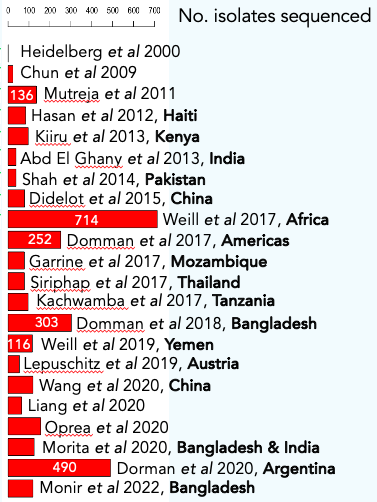
Together these 22 key papers have published 3254 V. cholerae genomes, of which 84% belonged to the current pandemic lineage (7PET lineage). All of these genome data has been useful to clinicians and epidemiologists to try and understand the spread of V. cholerae around the world and also to scientists and epidemiologists interested in V. cholerae genome evolution, for example, the spread of antibiotic resistance genes, and the presence or absence of virulence genes.
Of course, these 22 key papers do not include all papers that have published V. cholerae genomes. In fact, if you look at the NCBI database or ENA database, you will be able to find about 6600 V. cholerae genome assemblies (I last checked this in early 2024; there are probably loads more by now!). These will include some genomes that were published in papers that we have not listed here, but also some genomes that have not yet been published in papers. Furthermore, if you look in the ENA database, you will see about 14,000 V. cholerae sequence runs (again, this number is from early 2024), which are unassembled reads for V. cholerae isolates. This reflects the fact that many researchers in the past have not assembled reads into genome assemblies, but simply aligned the raw reads to the reference genome.
Clearly, there is a huge amount of genomic data available for V. cholerae. Our goal in the VibrioWatch project is to make all this data available and useful for clinicians, epidemiologists and researchers studying V. cholerae.
Pathogenwatch and Vibriowatch
Next we’ll tell you about Pathogenwatch, and its V. cholerae component, which we call VibrioWatch.
Pathogenwatch is a website that can be used as a global platform for genomic surveillance of pathogens of humans. It has been developed by the Centre for Genomic Pathogen Surveillance at Oxford University. So far, Pathogenwatch includes almost 322,000 genomes for pathogens that cause worldwide problems (as of early 2023). This is a phylogenetic tree (tree adapted from Avican et al 2021) of some major bacterial pathogens of humans, showing the number of genomes (as of January 2023) that are in Pathogenwatch so far for those species:
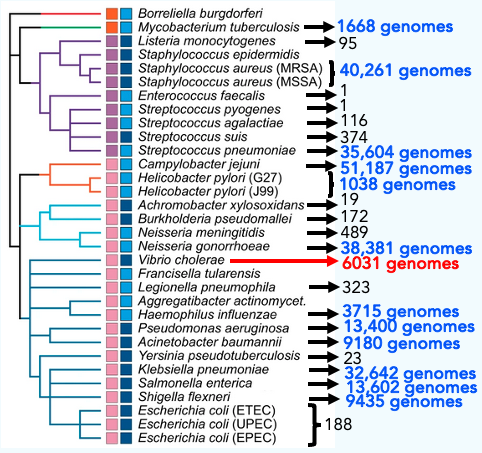
You can see that there are several species (e.g. Steptococcus pneumoniae) that include a large fraction of the genomes added so far. This reflects the fact that the research communities studying those species have found Pathogenwatch to be an extremely useful website for disseminating and analysing genome data for their species.
How many V. cholerae genomes are in Vibriowatch?
We are convinced that Pathogenwatch is a useful website for V. cholerae, and so we have started uploading V. cholerae genomes to Pathogenwatch. So far, we have put about 6000 V. cholerae genomes into Pathogenwatch (as of January 2024), that is, into its V. cholerae component Vibriowatch. But as we mentioned above, there are many 1000s of genomes already available, and our goal is to upload as many more as possible in the near future.
As well as the genome sequences for the approximately 6000 genomes, we have also uploaded metadata for those genomes that we have manually curated from the papers that published the genomes. This metadata includes strain name(s); assembly accession in databases (e.g. NCBI or ENA databases); PubMed id. of the paper; and phenotypic data for biotype, serogroup, serotype, and antimicrobial resistance.
You can see a list of the V. cholerae genomes uploaded into Pathogenwatch by visiting the Pathogenwatch website.
You can find the full list of V. cholerae genomes by clicking on the three small horizontal bars at the top left of the Pathogenwatch website:

This will bring up a menu:

If you click on ‘Public Genomes’ in this menu, it will give you the list of all the genomes in Pathogenwatch.
To just select V. cholerae genomes, click on ‘Genus’ in the menu that now appears:
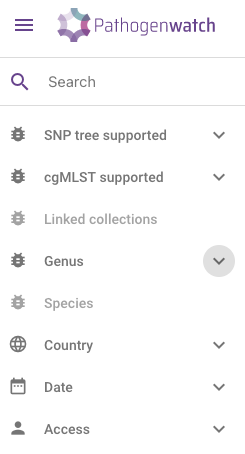
Then select ‘Vibrio’, to select just genomes from V. cholerae. You will now see a list of the approximately 6000 V. cholerae genomes (just showing the top of the list here):
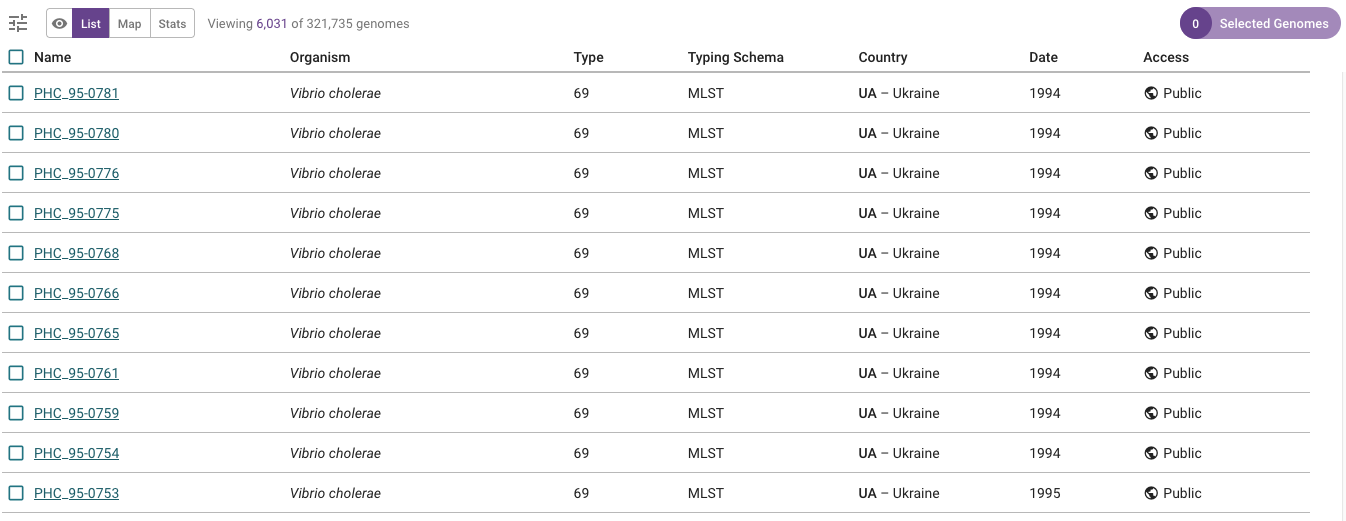
Where in the world were the isolates in Vibriowatch collected?
Once you have got the list of the approximately 6000 V. cholerae isolates in Vibriowatch (see above), if you now click on ‘Map’ (instead of ‘List’) at the top of the page, it will show a map of where these approximately 6000 isolates were collected:
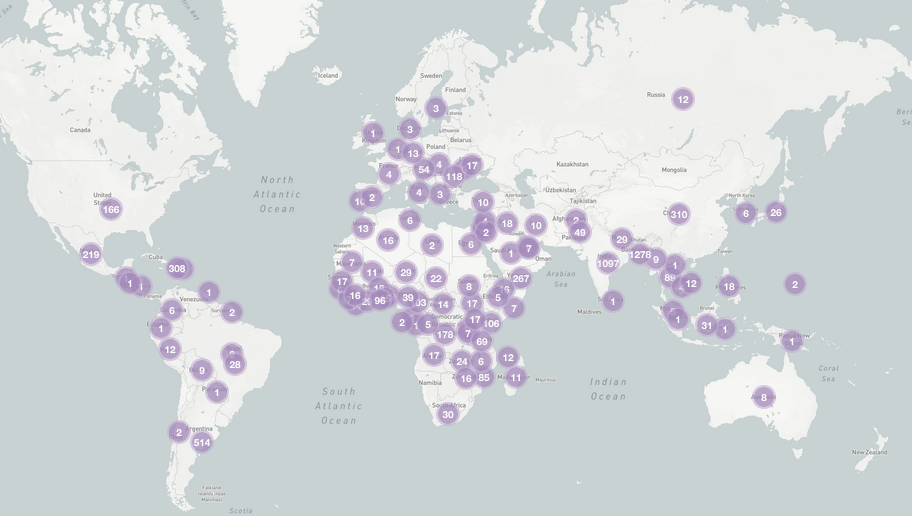
For example, you can see 219 were collected from Mexico, 308 from Haiti, and 310 from China, and so on.
The approximately 6000 isolates were collected between 1916 and 2023. As we put more and more genomes into Pathogenwatch for V. cholerae, the map will be updated, and we hope to cover a larger time span.
In the next sections, we will explain some analyses that can be carried out on the VibrioWatch website. These analyses will be both of the approximately 6000 genomes already uploaded, but also of genomes that you upload yourself into your private space in the VibrioWatch website.
CholeraBook
If you would like to learn more about cholera genomics, you may also be interested in our Online Cholera Genomics Course (CholeraBook).
Contact
I will be grateful if you will send me (Avril Coghlan) corrections or suggestions for improvements to my email address alc@sanger.ac.uk